Páginas vistas

lunes, 10 de diciembre de 2012

Neuronas salidas de la orina


Brain cells made from urine

Human excreta could be a powerful source of cells to study disease, bypassing some of the problems of using stem cells.
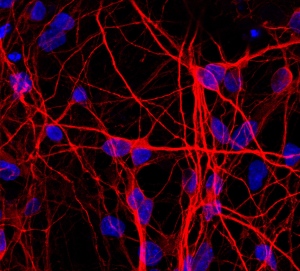
Getting neurons from cells discarded in urine, may one day help develop therapies for neurodegenerative diseases like Parkinson's disease.
LIHUI WANG
The technique, described online in a study inNature Methods this week1, does not involve embryonic stem cells. These come with serious drawbacks when transplanted, such as the risk of developing tumours. Instead, the method uses ordinary cells present in urine, and transforms them into neural progenitor cells — the precursors of brain cells. These precursor cells could help researchers to produce cells tailored to individuals more quickly and from more patients than current methods.
Researchers routinely reprogram cultured skin and blood cells2 into induced pluripotent stem (iPS) cells, which can go on to form any cell in the body. But urine is a much more accessible source.
Stem-cell biologist Duanqing Pei and his colleagues at China's Guangzhou Institutes of Biomedicine and Health, part of the Chinese Academy of Sciences, had previously shown that kidney epithelial cells in urine could be reprogrammed into iPS cells3.
However, in that study the team used retroviruses to insert pluripotency genes into cells — a common technique in cell reprogramming. This alters the genetic make-up of cells and can make them less predictable, so in this study, Pei and his colleagues introduced the genes using vectors which did not integrate in the cellular genome.
One of their experiments produced round colonies of reprogrammed cells from urine that resembled pluripotent stem cells after only 12 days — about half the time usually required to produce iPS cells. When cultured further, the colonies took on the rosette shape common to neural stem cells.

Tumour-free

Pei and his colleagues transferred the cells to a growth medium used for neurons, and found that these reprogrammed cells went on to form functional neurons in the lab.
When the team repeated the experiment and transplanted the cells into newborn rat brains, the cells did not form tumours. Instead, when the brains were examined four weeks later, the cells had taken on the shape and molecular markers of neurons.
Neural progenitors proliferate in culture, so researchers can produce plenty of cells for their experiments. Getting enough cells has previously been a problem for such 'direct reprogramming' techniques, which produce neurons more quickly than producing and differentiating iPS cells.
“This could definitely speed things up,” says James Ellis, a medical geneticist at Toronto's Hospital for Sick Children in Ontario, Canada, who makes patient-specific iPS cells to study autism spectrum disorders.
The benefit of sourcing cells in this way is that urine can be collected from nearly any patient, says geneticist Marc Lalande, who creates iPS cells to study neurogenetic diseases at the University of Connecticut Health Center in Farmington, and is particularly intrigued by the possibility of making iPS cells and neural progenitors from the same patient.
“We work on childhood disorders,” he says. “And it's easier to get a child to give a urine sample than to prick them for blood.”

martes, 4 de diciembre de 2012

Juguetes para todos

Desde codondesastre.blogspot.com recomiendo la página www:/nosinjuguetes.es/
un portal que ofrece juguetes a familias/personas que por las graves condiciones económicas que padecen muchísimos ciudadanos españoles, no pueden comprarlos para sus hijos. 

Es terrible que condenemos a los más inocentes a no celebrar la Navidad como a ellos  más les gusta. Y otra cosa interesante; al usar la www mencionada nadie tiene que sentirse avergonzado/a de solicitar la donación de juguetes nuevos o usados pero en buenas condiciones y limpios. Ya bastante se está sufriendo para encima aguantar el recochineo caritativo. Aquí se ofrece una forma práctica de ejercer la solidaridad. No teman por la confidencialidad de sus datos : se explica que el 6 de enero borran las información recibida tanto de solicitantes de juguetes como de donantes.

domingo, 2 de diciembre de 2012

Genes humanos patentados

Another Supreme Review of Human Gene Patents


by Eliot Marshall  (información de Science)

¿A quién pertenecen los genes? ¿A las empresas que secuencian y reconocen sus funciones? ¿ O más bien son un legítimo patrimonio de la humanidad?. Eso es lo que analiza  la Corte Suprema estadounidense. Puede que si se declaran válidas las patentes de Myriad Genetics sobre los genes BRCA1 y BRCA2, el precedente despeja la puerta legal para que cada ristra de genes constituya un fabuloso producto comercial. Pues en eso estamos: el genoma humano como oscuro objeto de deseo. Más valioso que el petróleo.


"In a terse note this afternoon, the U.S. Supreme Court gave notice that it will once again consider the long debated question of whether human genes can be patented. The court granted certiorari to a group of plaintiffs who argue that patents on the breast cancer genes BRCA1 and BRCA2, which are owned by the diagnostic company Myriad Genetics of Salt Lake City, should be declared invalid. The case was filed on behalf of a clinician"

viernes, 30 de noviembre de 2012

Modelo computacional del cerebro humano

NEUROSCIENCE


Building the Human Brain 

  1. Christian K. Machens
+Author Affiliations
  1. Champalimaud Neuroscience Programme, Champalimaud Centre for the Unknown, Av. Brasilia, 1400-038 Lisbon, Portugal.
  1. E-mail: christian.machens@neuro.fchampalimaud.org

  2. alinaquevedo@yahoo.com


El presente trabajo es inspirador y muy importante. Mediante un modelo por ordenador, se simulan las redes neuronales del cerebro humano y lo que es mejor, sus funciones. Hagan un esfuerzo imaginativo y lleven el presente pasito en neurociencias hacia el futuro lejano: un ordenador que "reproduce" las vivencias humanas. Pues eso, de momento todo un hito.
The human brain is exceedingly complex and studying it encompasses gathering information across a range of levels, from molecular processes to behavior. The sheer breadth of this undertaking has perhaps led to an increased specialization of brain research and a concomitant fragmentation of our knowledge. A potential solution is to integrate all of this knowledge into a coherent simulation of the brain (1). However, simply “building” a brain from the bottom up by replicating its parts, connections, and organization fails to capture its essential function—complex behavior (2). Instead, just as engineers can only construct cars and computers because they know how they work, we will only be able to construct a brain if we know how it works—that is, if we understand the computations that are carried out in individual brain areas, and how these computations are implemented on the level of neural networks. On page 1202 of this issue, Eliasmith et al. (3) make headway toward this benchmark by presenting just such a large-scale computational model of the human brain that can simulate a variety of complex behaviors.

jueves, 29 de noviembre de 2012

Variaciones dentro del genoma humano


Past 5,000 years prolific for changes to human genome

High-resolution sequencing study emphasizes importance of rare variants in disease.
Humans are carrying around more harmful mutations in the last 5,000 years.
CHRIS DASCHER / GETTY IMAGES
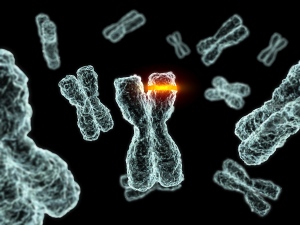
Aquí va un artículo fundamental que cualquier persona debería al menos conocer. Se trata de estudios sobre la naturaleza íntima del genoma humano. Al parecer el genoma humano no ha dejado de cambiar a lo largo de los 5,000 años de evolución transcurridos. Las poblaciones humanas han crecido exponencialmente, y como resultado, en cada generación se han producido nuevas mutaciones genéticas. Lo que saca a la luz el presente trabajo es que hoy en día los humanos poseen una vasta y abundante colección de variantes genéticas raras dentro del ADN que codifica proteínas (es decir, los genes que sirven de "plantilla" para la producción de determinadas proteínas). El estudio del que "Nature" da cuenta de esas variaciones raras. Los científicos han empleado la secuenciación en profundidad ( como pesca a profundidad) para localizar y registrar más de un millón de variantes de un nucleótido (por ejemplo gataca y gacaca). No lo duden, el ADN es el producto más valioso del planeta ya que quienes patenten determinadas secuencias relacionadas con enfermedades tienen las puertas abiertas para la "producción" de terapias génicas. En el esquema se explica el proceso de transcripción y traducción.
"The human genome has been busy over the past 5,000 years. Human populations have grown exponentially, and new genetic mutations arise with each generation. Humans now have a vast abundance of rare genetic variants in the protein-encoding sections of the genome12.
A study published today in Nature3 now helps to clarify when many of those rare variants arose. Researchers used deep sequencing to locate and date more than one million single-nucleotide variants — locations where a single letter of the DNA sequence is different from other individuals — in the genomes of 6,500 African and European Americans. Their findings confirm early work by Akey1 suggesting that the majority of variants, including potentially harmful ones, were picked up during the past 5,000–10,000 years. Researchers also saw the genetic stamp of the diverging migratory history of the two groups.
The large sample size — 4,298 North Americans of European descent and 2,217 African Americans — has enabled the researchers to mine down into the human genome, says study co-author Josh Akey, a genomics expert at the University of Washington in Seattle. He adds that the researchers now have “a way to look at recent human history in a way that we couldn’t before.”
Akey and his colleagues were able to dig out genetic variants occurring in less than 0.1% of the sample population — a resolution that is a full order of magnitude finer than that achieved in previous studies, says Alon Keinan, a statistical geneticist at Cornell University in Ithaca, New York, who was not involved with the study.
Of 1.15 million single-nucleotide variants found among more than 15,000 protein-encoding genes, 73% in arose the past 5,000 years, the researchers report.
On average, 164,688 of the variants — roughly 14% — were potentially harmful, and of those, 86% arose in the past 5,000 years. “There’s so many of [variants] that exist that some of them have to contribute to disease,” says Akey

Genetic bottleneck

The researchers found that the European Americans had a larger proportion of potentially harmful variants — probably an artefact of their original migration out of Africa. The first small group of humans that left Africa for Europe experienced a sudden drop in genetic diversity — a ‘bottleneck’ — owing to the smaller pool of possible mating partners. In the rapid expansion in population size that followed, selection was slow to catch up to and weed out potentially harmful mutations.
More broadly, the results suggest that humans are carrying around larger numbers of deleterious mutations than they did a few thousand years ago. But this doesn’t mean that humans now are more susceptible to disease, says Akey. Rather, it suggests that most diseases arecaused by more than one variant, and that diseases could operate through different genetic pathways and mechanisms in different people.
The findings further undermine the idea that common diseases are caused by common variations, says Sarah Tishkoff, a geneticist at the University of Pennsylvania in Philadelphia. When genomics researchers first began looking at the genome for links to diseases, that was their assumption, but they quickly saw it fall short (see Nature 456, 18–21; 2008).
“This type of study nails home the point that we need to be looking at rare variation,” Tishkoff says. 
As it becomes cheaper and easier to sequence individuals’ genomes, researchers are likely to see finer genetic patterns and trends in the coming years. They could even see patterns of ancestry within just a few generations, says Akey".
Nature
 
doi:10.1038/nature.2012.11912

miércoles, 28 de noviembre de 2012

Suicidios por desalojos

Cuando termino de escribir el post sobre los suicidios en Asia (a paper made by Science) voy a la página digital de "El País" y allí me doy de cara con la noticia de que un hombre de 59 años se ha quitado la vida, al parecer agobiado por una deuda de alquiler. Y tal vez por terribles circunstancias familiares. Entonces me parece que hablar, o postear, sobre los suicidios en China es casi un insulto para todos esos ciudadanos que en cualquier punto de Spain están desesperados, deprimidos en grado extremo. Esas y esos que no ven salida y no encuentran modo de encausar su vida en las terribles condiciones de las que no controlan nada. Parados mayores de 45 años que se sienten como mercancía caducada. Recién graduados universitarios con idiomas, masters y cuanto se pueda pedir que han de largarse forzosamente a buscar un empleo digno fuera de España. Pequeños empresarios hundidos  hasta el cuello. Que ya no saben como ponerse para evitar cerrar el negocio. Y entonces me vienen a la neurona insomne ellas/ellos. Los ungidos por la fortuna. Los promotores de chiringuitos caritativos. Las/los muy nobles protagonistas del papel couché. Mientras los médicos y las enfermeras tienen que salir con sus batas blancas a protestar en las calles de Madrid por los recortes contra la sanidad pública. Y se imparten clases fuera de las aulas universitarias. Que frivolidad de blog tengo. Hablar de suicidios en China.

Medusas inmortales


La próxima vez que en la playa les pique una medusa, porfa no la maldigan demasiado. Son invertebrados interesantísimos de los que los científicos sacan mucho provecho. El motivo tiene que ver con la posibilidad que tienen de rejuvenecer. Algo que en el magnífico reportaje de N. Rich para el magazine del NYT se describe como un proceso hacia la inmortalidad. Vamos como si un pollo regresara al estado de huevo. Aquí he escogido algunos buenos motivos por los que las "sencillas" medusas resultan un banco de pruebas muy útil.


"Until recently, the notion that human beings might have anything of value to learn from a jellyfish would have been considered absurd. Your typical cnidarian does not, after all, appear to have much in common with a human being. It has no brains, for instance, nor a heart. It has a single orifice through which its food and waste pass — it eats, in other words, out of its own anus. But the Human Genome Project, completed in 2003, suggested otherwise. Though it had been estimated that our genome contained more than 100,000 protein-coding genes, it turned out that the number was closer to 21,000. This meant we had about the same number of genes as chickens, roundworms and fruit flies. In a separate study, published in 2005, cnidarians were found to have a much more complex genome than previously imagined.
“There’s a shocking amount of genetic similarity between jellyfish and human beings,” said Kevin J. Peterson, a molecular paleobiologist who contributed to that study, when I visited him at his Dartmouth office. From a genetic perspective, apart from the fact that we have two genome duplications, “we look like a damn jellyfish.”
This may have implications for medicine, particularly the fields of cancer research and longevity. Peterson is now studying microRNAs (commonly denoted as miRNA), tiny strands of genetic material that regulate gene expression. MiRNA act as an on-off switch for genes. When the switch is off, the cell remains in its primitive, undifferentiated state. When the switch turns on, a cell assumes its mature form: it can become a skin cell, for instance, or a tentacle cell. MiRNA also serve a crucial role in stem-cell research — they are the mechanism by which stem cells differentiate. Most cancers, we have recently learned, are marked by alterations in miRNA. Researchers even suspect that alterations in miRNA may be a cause of cancer. If you turn a cell’s miRNA “off,” the cell loses its identity and begins acting chaotically — it becomes, in other words, cancerous.
Hydrozoans provide an ideal opportunity to study the behavior of miRNA for two reasons. They are extremely simple organisms, and miRNA are crucial to their biological development. But because there are so few hydroid experts, our understanding of these species is staggeringly incomplete.
“Immortality might be much more common than we think,” Peterson said. “There are sponges out there that we know have been there for decades. Sea-urchin larvae are able to regenerate and continuously give rise to new adults.” He continued: “This might be a general feature of these animals. They never really die.”