| ||||||||||||||||||||||||||||||||||||||||||||||||||||
| ||||||||||||||||||||||||||||||||||||||||||||||||||||
viernes, 6 de mayo de 2016
Un poquito de ciencia, porfa


jueves, 5 de mayo de 2016
Mosquitos transgénicos
Imprimirhttp://es.rt.com/3ujg
Sueltan millones de mosquitos mutantes transgénicos en Brasil
Publicado: 7 jul 2015 21:11 GMT

Publicado: 7 jul 2015 21:11 GMT
Millones de mosquitos genéticamente modificados han sido liberados en la ciudad brasileña de Piracicaba, en el marco de una campaña para reducir la propagación del dengue en el país. (Lo que nos faltaba, drones, Clinton II, miles de refugiados hambrientos. y el DAES masacrando niños.)
Sueltan millones de mosquitos transgénicos para combatir el dengue en Brasil Wikipedia / Muhammad Mahdi Karim
Todo sobre este tema

Se trata de varones mutantes portadores del gen que se transmite a las larvas y las mata antes de que alcancen la edad de reproducción, según informó la revista 'PLOS Neglected Tropical Diseases'.
La tecnología para combatir este tipo de enfermedad fue desarrollada por la compañía biotecnológica británica Oxitec, que goza de un permiso para realizar este tipo de experimentos en Brasil.
Además, la empresa está esperando la autorización de la Agencia de Alimentos y Medicamentos estadounidense para realizar pruebas semejantes en Florida.
Los científicos detectaron que desde abril del 2015, cuando comenzaron las pruebas en Piracicaba, la zona de máxima concentración de los portadores del dengue Aedes aegypti, el 50% de la nueva generación de dichos mosquitos ha sido fecundado por varones transgénicos.
lunes, 18 de abril de 2016
Hillary Clinton: the "teflon candidate"


This is an English translation of an article that I wrote for the German magazine, Compact.
I was encouraged by the high level of intelligent discourse that Compact brings to its readers. If only the US had more people capable of reaching beyond entertainment to comprehending the forces that affect them, there might be some hope for America.
Compact brings hope to Germany. The German people are beginning to understand that their country is not sovereign but a vassal of Washington and that their chancellor serves Washington’s hegemony and American financial interests, and not the German people.
Hillary Clinton is proving to be the “teflon candidate.” In her campaign for the Democratic presidential nomination, she has escaped damage from major scandals, any one of which would destroy a politician. Hillary has accepted massive bribes in the form of speaking fees from financial organizations and corporations. She is under investigation for misuse of classified data, an offense for which a number of whistleblowers are in prison. Hillary has survived the bombing of Libya, her creation of a failed Libyan state that is today a major source of terrorist jihadists, and the Benghazi controversy. She has survived charges that as Secretary of State she arranged favors for foreign interests in exchange for donations to the Clintons’ foundation. And, of course, there is a long list of previous scandals: Whitewater, Travelgate, Filegate. Diana Johnstone’s book, Queen of Chaos, describes Hillary Clinton as “the top salesperson for the ruling oligarchy.”
Hillary Clinton is a bought-and-paid-for representative of the big banks, the military-security complex, and the Israel Lobby. She will represent these interests, not those of the American people or America’s European allies.
The Clintons’ purchase by interest groups is public knowledge. For example, CNN reports that between February 2001 and May 2015 Bill and Hillary Clinton were paid $153 million in speaking fees for 729 speeches, an average price of $210,000.
As it became evident that Hillary Clinton would emerge as the likely Democratic presidential candidate, she was paid more. Deutsche Bank paid her $485,000 for one speech, and Goldman Sachs paid her $675,000 for three speeches. Bank of American Morgan Stanley, UBS, and Fidelity Investments each paid $225,000.
Despite Hillary’s blatent willingness to be bribed in public, her opponent, Bernie Sanders, has not succeeded in making an issue of Hillary’s shamelessness. Both of the main establishment newspapers, the Washington Post and the New York Times have come to Hillary’s defense.
Hillary is a war-monger. She pushed the Obama regime into the destruction of a stable and largely cooperative government in Libya where the “Arab Spring” was a CIA-backed group of jihadists who were used to dislodge China from its oil investments in eastern Libya. She urged her husband to bomb Yugoslavia. She pushed for “regime change” in Syria. She oversaw the coup that overthrew the democratically elected president of Honduras. She brought neoconservative Victoria Nuland, who arranged the coup that overthrew the democratically elected president of Ukraine, into the State Department. Hillary has called President Vladimir Putin of Russia the “new Hitler.” Hillary as president guarantees war and more war.
In the United States government has been privatized. Office holders use their positions in order to make themselves wealthy, not in order to serve the public interest. Bill and Hillary Clinton epitomize the use of public office in behalf of the office holder’s interest. For the Clintons government means using public office to be rewarded for doing favors for private interests. The Wall Street Journal reported that “at least 60 companies that lobbied the State Department during her [Hillary Clinton’s] tenure as Secretary of State donated a total of more than $26 million to the Clinton Foundation.”

jueves, 14 de abril de 2016
SOS glyphospate
Slap in the Face for Monsanto: European Parliament Votes to Ban Most Uses of Glyphosate
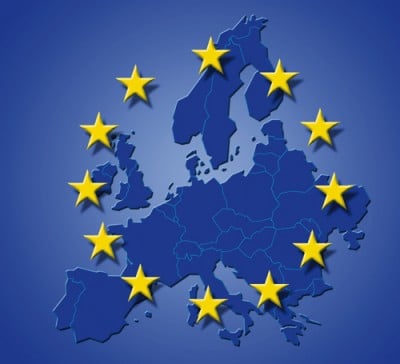
The EU Parliament has responded to the health concerns of millions by calling on the Commission to severely restrict permitted uses of the toxic herbicide glyphosate, including an effective ban on pre-harvest dessication of crops.
This resolution opposes approval of glyphosate for most uses, and takes aim at the excessive length of the approval proposed by the Commission, which must now address these concerns.
The European Parliament today adopted a resolution strongly opposing the Commission’s proposal to reapprove the controversial weedkiller glyphosate for use in Europe for 15 years.
The resolution flags significant concerns with the Commission’s proposal, notably calling for significantly restricting the uses for which glyphosate – best known in Monsanto’s ‘Roundup’ formulation – could be approved.
The Parliament’s vote precedes a decision by EU government representatives on whether or not to support the Commission proposal to approve glyphosate for use in the EU. This may take place at the next EU pesticides committee meeting on 18-19 May.
While the 374 to 225 vote is non-binding on the Commission and EU governments, it will nonetheless carry strong moral weight since it comes from the EU’s only elected body directly representing EU citizens and will force a discussion of the issues raised.
The resolution calls for no approval of glyphosate – recently determined to be ”probably carcinogenic” by the WHO’s cancer watchdog, the IARC – for many uses now considered acceptable, including:
non-professional uses;
in or close to public parks, playgrounds and gardens;
where integrated pest management systems are sufficient for necessary weed control.
It also calls for the renewal to be limited to just seven years instead of the 15 proposed by the Commission.
Pre-havest ‘dessication’ strictly limited
The resolution additionally demands strict limits on ‘pre-harvest’ applications on crops, with a strong recital calling such uses ”unacceptable”. This refers to the practice of spraying crops up to two weeks before harvest to ‘dessicate’ the plants and make havesting easier.
Pre-harvest application of glyphosate is a clear route for human exposure to glyphosate via the harvested crop. Currently glyphosate formulations are licenced for a wide range of crops including wheat, barley, oats, oilseed rape (canola), linseed, field beans and peas.
This use of glyphosate is believed to be the main source of the herbicide and its residuesin bread and NGOs including the UK’s Soil Association are campaiging to stop this use.
The resolution further calls for:
An independent review of overall toxicity of glyphosate;
A call on the Commission and EFSA to immediately disclose all scientific evidence for the positive classification of glyphosate, given the overriding public interest in disclosure;
A call on the Commission to test and monitor glyphosate residues in foods and drinks produced in the Union as well as in imported produce;
Strong criticism of the Commission for accepting an incomplete dossier with regard to endocrine disruption;
martes, 12 de abril de 2016
La red limpia

domingo, 10 de abril de 2016

viernes, 8 de abril de 2016
Caña a la droga

"Ocultaban el estupefaciente en el interior de bombonas de gas y baterías eléctricas con el objetivo de trasladar la sustancia ilegal procedente de Sudamérica
Han sido detenidas 13 personas y se han incautado varias armas de fuego, abundante munición y 115 kilogramos de cocaína que pensaban distribuir por diversos países europeos
En la investigación han colaborado la Dirección de Operaciones Aduaneras Francesa, la RST Holandesa (Equipo de Investigación Criminal) y la Dirección Antinarcóticos Colombiana así como el imprescindible apoyo del Oficial de Enlace en Martinica, dependiente de CITCO
Agentes de la Guardia Civil y de la Policía Nacional han desmantelado una organización de narcotraficantes que introducía droga en España por vía marítima a bordo de embarcaciones tipo velero. La operación se ha desarrollado en la isla de Gran Canaria, en la Comunidad de Madrid y en el País Vasco. Camuflaban estupefaciente en el interior de bombonas de gas y de baterías eléctricas con el objetivo de trasladar la sustancia ilegal procedente de Sudamérica. Han sido detenidas 13 personas y se han incautado varias armas de fuego, abundante munición y 115 kilogramos de cocaína que pensaban distribuir por diversos países europeos. En la investigación han colaborado la Dirección de Operaciones Aduaneras Francesa, la RST Holandesa (Equipo de Investigación Criminal) y la Dirección Antinarcóticos Colombiana así como el imprescindible apoyo del Oficial de Enlace en Martinica, dependiente de CITCO.
La investigación se inició en el mes de octubre de 2014 por parte de la Policía Nacional, al tener conocimiento de que un grupo afincado en Galicia tenía como objetivo la introducción de grandes cantidades de cocaína en España. Al parecer pensaban introducir la droga vía marítima, utilizando para ello embarcaciones recreativas tipo velero. Según avanzó la investigación se pudo determinar que la organización tenía ramificaciones en otras partes del territorio nacional, como las Islas Canarias, País Vasco y Madrid, así como a nivel internacional en Cuba, Grenada o Bonaire.
Las investigaciones se centraron desde su inicio, de forma más concreta, en las actividades del líder de la organización asentado en la isla de Gran Canaria, el cual se dedicaba a la introducción y distribución de grandes partidas de cocaína procedentes de Sudamérica. Asimismo se pudo determinar que esta persona, para disminuir los riesgos y las pérdidas económicas que se podían generar el apresamiento de las embarcaciones, utilizaba un modus operandi concreto. Éste consistía en el envío anual de dos o tres embarcaciones distintas, las cuales guardaban en su interior cantidades importantes de cocaína, superando el centenar de kilogramos.
Veleros desde el Caribe hasta España
Tras realizar diferentes pesquisas se averiguó que el líder de la organización se trasladó en varias ocasiones a Sudamérica para acordar personalmente la adquisición de las grandes partidas de cocaína y se encargó de proporcionar la logística necesaria para su organización. Para ello adquirió en las Islas Canarias diversas embarcaciones tipo velero las cuales, una vez modificadas por otros miembros de la organización, eran navegadas hasta el mar Caribe donde se aprovisionaban de la cocaína y regresaban a costas españolas.
Después, la primera medida de seguridad que tomaba la organización era modificar el sistema eléctrico del barco y la instalación de gas. El objetivo de estas modificaciones era simular que las baterías y las bombonas de butano estaban proporcionando energía a la embarcación o a los elementos de esta, cuando realmente su función era la ocultación de la droga. Una vez modificadas, el siguiente paso era cambiar el pabellón de las embarcaciones a uno extranjero para dificultar las investigaciones y trasladarlas hasta el Caribe. Allí permanecían durante al menos un mes, esperando a que el jefe de la organización les diera la orden oportuna para que se dirigieran a una hora y zona determinada -que previamente éste habría acordado con la organización propietaria de la sustancia estupefaciente- y así poder realizar la carga de la droga."
Suscribirse a:
Entradas (Atom)